Yes, you can use an AI voice in commercial ads, as long as three things are true: your AI voice provider's license covers commercial use on your plan, the voice does not imitate a real person without their permission, and you follow the disclosure rules of the platform and country where the ad runs. Most problems come from free plans that are personal use only, from cloned voices without consent, and from political or robocall uses with their own rules. This guide explains each point with sources, checked on 27 November 2026.
This article is general information, not legal advice. For a specific campaign, ask a lawyer in the market where it will run.
If you are producing a spot now, see AI voice for ads for voices, demos and formats.
What makes an AI voiceover legal to use in an ad?
Think of it as three separate questions. You need a "yes" to all of them.
| Question | Who decides | What to check |
|---|---|---|
| 1. Do I have a license to use this audio commercially? | Your AI voice provider's terms | Commercial use on your plan, advertising included, and whether you can pass the rights to a client |
| 2. Am I using someone's voice without permission? | Right of publicity and consent laws | Library voices licensed for this use; clones only of your own voice or with written consent |
| 3. Do I need to tell people it is AI? | Platform policies and local law | Political ad rules, robocall rules, the EU AI Act, and keeping the provider's watermark intact |
Does your AI voice license cover commercial use?
This is the question most people skip. The audio you generate is governed by the provider's terms, and many free tiers do not allow commercial use. A monetized video, a client project, a paid ad or a product demo all count as commercial.
On Voicefinder, the rules are in the Terms, clause 7:
- Clause 7.1, commercial use: on a paid plan, generated content "may be used for commercial purposes, including advertising in any media, with no additional licence required". On the Free plan, it is for "personal, non-commercial purposes" only. Each audio follows the plan you had when you generated it.
- Clause 7.2, license: a non-exclusive, worldwide and perpetual license over each file, which you can assign or sublicense to your clients as part of your own products or services. It covers the specific file, not the voice itself.
- Clause 7.3, restrictions: you may not impersonate anyone or imply their endorsement, use the audio to train AI models, build voice banks or datasets from it, use it for unlawful, defamatory, threatening or obscene purposes, or remove the AI marks and labels.
Commercial use starts on Basic, at $12 a month for 100,000 characters (about 100 minutes of audio). Compare plans on pricing.
Two practical notes for agencies. First, library voices are not exclusive: another brand can use the same voice. If exclusivity matters, clone a voice you have the rights to, or hire a voice actor with an exclusivity clause. Second, check that the license lets you hand the files to your client; on Voicefinder it does (clause 7.2).
Can you use a cloned voice in an ad?
Yes, if it is your own voice or you have the explicit consent of the person whose voice it is. Using a celebrity's or a competitor's spokesperson's voice without permission is where the legal risk is highest, and it is prohibited by every reputable provider.
- United States: voices are protected by state right-of-publicity laws. Tennessee's ELVIS Act, signed on 21 March 2024 and in force since 1 July 2024, explicitly extends that protection to a person's voice, including AI simulations of it (Manatt summary).
- Voicefinder's rule: every time you create a clone, you declare that the voice is yours or that you have the person's express consent; clones are private to your account; cloning third parties without consent, celebrities included, is prohibited (Terms, clause 7.7).
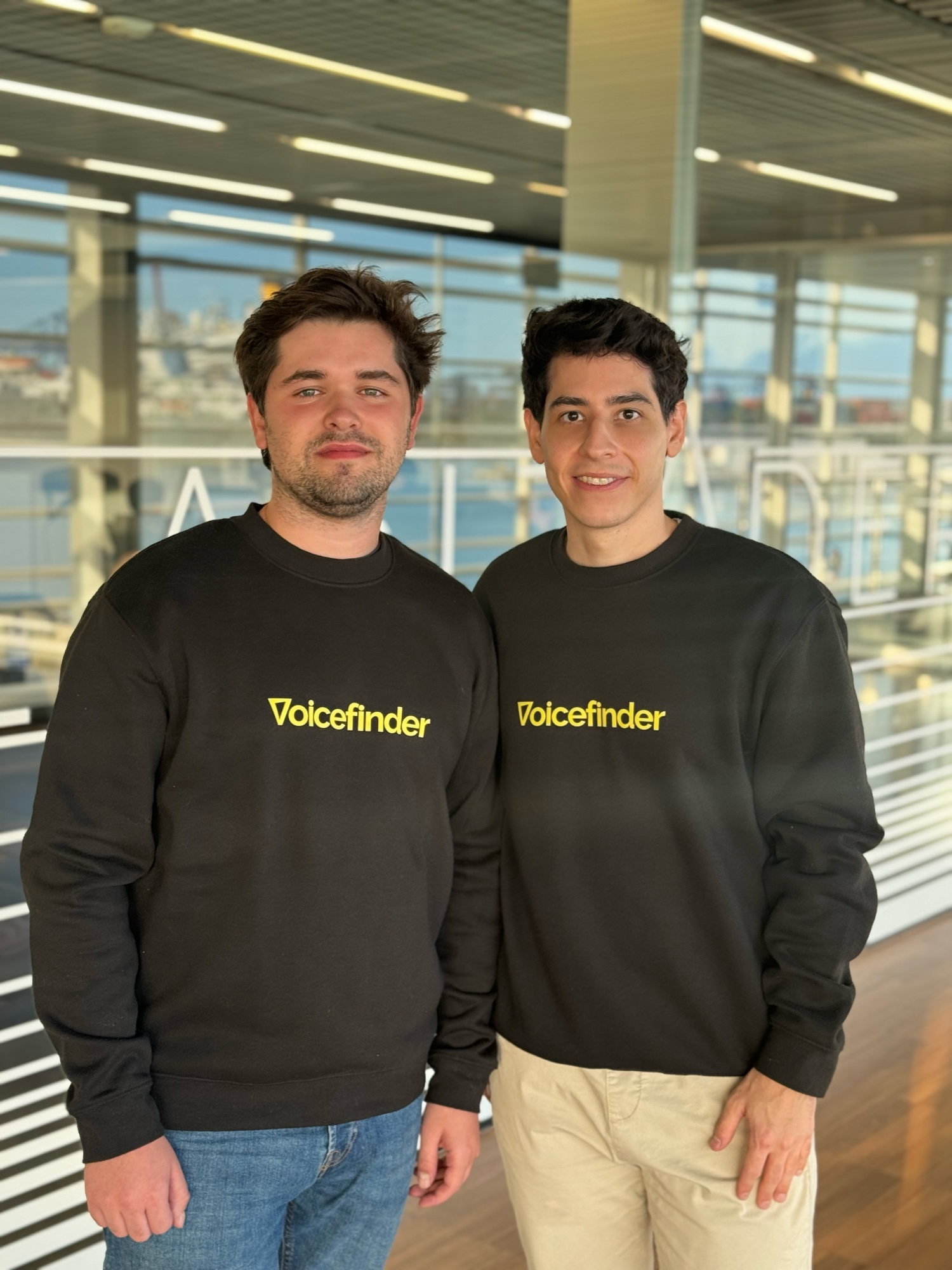
Here is a cloned voice used the right way. Pablo Giménez, a professional voice-over artist and Voicefinder co-founder, cloned his own voice and Voyager 1 read a TV spot he had recorded in the studio:
For brands, the clean way to get a recognizable voice is a written agreement with a voice actor that covers the clone, its uses and its duration. More in AI voice cloning: how it works, consent and safety and on the AI voice cloning page.
Do you have to disclose that an ad uses an AI voice?
It depends on the kind of ad and where it runs. For a standard product ad with a library voice that does not imitate anyone, most platforms do not require a label today. These are the main exceptions:
- Political and election ads. Google requires advertisers to "disclose all Election Ads that contain synthetic or digitally altered content" that inauthentically depicts real or realistic-looking people or events, audio included (Google Ads political content policy).
- Calls and voicemail drops in the US. On 8 February 2024 the FCC ruled that AI-generated voices are "artificial" voices under the Telephone Consumer Protection Act, so AI-voice robocalls need the same prior express consent as any prerecorded call (Cooley analysis).
- YouTube. Creators must disclose realistic altered or synthetic content, such as making a real person appear to say something they did not (YouTube Help).
- European Union. Article 50 of the EU AI Act applies from 2 August 2026. Providers must mark synthetic audio in a machine-readable way (50.2), and deployers must disclose deep fakes (50.4), with a lighter duty for evidently artistic, creative or fictional works (Article 50 text).
Voicefinder's Terms (clause 7.4) split this the same way: Voicefinder, as provider, applies the machine-readable marking; the duty to inform the public, where the law requires it, stays with the advertiser.
What does the watermark do, and should you keep it?
Every Voicefinder file carries two marks you cannot hear:
- AudioSeal, an inaudible watermark embedded in the sound itself, which a detector can read.
- C2PA Content Credentials, a signed record of which tool generated the file.
They do not change how the ad sounds and they are not a spoken disclaimer. They protect you: if someone questions whether your ad used a real person's voice, the file shows where it came from. Removing them breaches clause 7.3 and, in the EU, undermines the marking the AI Act requires. Keep them.
Here is a commercial read generated with a library voice, as it would go into a spot:
A 7-point checklist before your AI-voiced ad goes live
- The audio was generated on a plan that includes commercial use.
- The provider's license covers advertising and lets you deliver the files to your client.
- The voice is a library voice or a clone you have written consent for.
- The script does not imitate or name a real person in a way that implies their endorsement.
- Political, election or social-issue ads use the platform's synthetic-content disclosure.
- Outbound calls or voicemail drops with AI voice have prior express consent (US).
- The watermark and C2PA credentials are still in the delivered file.
Which AI voices work best for ads?
Once the legal side is covered, casting matters most. Start with the commercial voices collection, pick an accent your audience trusts (American, British, Spanish for US Hispanic audiences) and direct the read with emotion tags. Our guide on voice over rates vs AI voiceover helps you decide when to book a voice actor instead.
FAQ
Is it legal to use AI voices for commercial purposes?
Yes, when your provider's license includes commercial use, the voice is licensed or used with consent, and you follow the disclosure rules that apply to your ad. On Voicefinder, commercial use is included on every paid plan.
Can I use a free AI voice in an ad?
Usually not. Many free plans, Voicefinder's included, are personal use only. Use a paid plan for any ad.
Can I use an AI voice that sounds like a celebrity?
No. Imitating a real person without permission can violate right-of-publicity laws, such as Tennessee's ELVIS Act, and breaks the terms of reputable providers.
Do I need to say an ad uses an AI voice?
For political and election ads, YouTube content that realistically depicts real people, and deep fakes under the EU AI Act, yes. For a standard product ad with a library voice, most platforms do not require it today. Rules change, so check the platform before launch.
Who owns an AI-generated voiceover?
Under Voicefinder's Terms you receive a non-exclusive, worldwide and perpetual license over each file, which you can pass on to your clients. The voice itself is not exclusive to you.
Can I use AI voice in robocalls?
In the US, only with the same prior express consent the TCPA requires for any prerecorded call, as the FCC confirmed in February 2024.