In 2026, a professional non-union voice actor typically charges $350 to $450 for a 1-2 minute corporate or explainer video and $30 to $55 per finished minute for e-learning, while broadcast and paid online ads add usage fees that can reach several thousand dollars a year. An AI voiceover costs a monthly subscription instead: on Voicefinder, commercial use starts at $12 a month for about 100 minutes of audio. This guide compares both, line by line, so you can decide which one each project needs.
The rate figures below come from Voice Crafters' 2026 rate guide, which states that it is based on the GVAA (Global Voice Acting Academy) rate guide. Rates are in US dollars, non-union and negotiable; union (SAG-AFTRA) work follows its own scales. To hear what AI sounds like on your own script, try the AI voiceover generator.
How are voice over rates calculated?
A voice actor's quote usually has two parts. Knowing both explains why the same 30-second script can cost $300 or $5,000.
- Session fee: the recording itself, priced by finished minute, by word, by project length or by studio time.
- Usage (or buyout): where the audio will run, for how long and in which market. A local radio spot for one month costs far less than a national TV spot for a year. Non-broadcast work (internal training, explainers on your own site) often has no separate usage fee.
Pick-ups (fixing lines after the session) are usually included for small changes in the original script and billed when the script changes.
Voice over rates in 2026 by project type
| Project | Typical non-union rate (USD) | Unit |
|---|---|---|
| E-learning (internal training) | $30 – $55 | per finished minute, minimum $350 – $450 |
| Corporate or explainer video, 1-2 min | $350 – $450 | per project, non-broadcast |
| Corporate or explainer video, 3-5 min | $450 – $550 | per project, non-broadcast |
| Corporate narration over 20 min | $33 – $40 | per finished minute |
| Local/regional radio spot | $275 – $400 (1 month) to $900 – $1,500 (12 months) | per spot, plus session fee |
| National radio spot | $550 – $700 (1 month) to $1,500 – $2,500 (12 months) | per spot, plus session fee |
| Paid social ad | $300 – $450 (1 month) to $1,000 – $1,500 (12 months) | per spot |
| National TV spot | $1,000 – $1,500 (1 month) to $4,000 – $8,000 (12 months) | per spot, plus session fee |
| Audiobook narration | $200 – $400 | per finished hour, including editing and mastering |
Source: Voice Crafters, "Voice Over Rates 2026", based on the GVAA rate guide; read on 27 November 2026. The official GVAA Rate Guide is free after accepting its terms. Rates vary by talent, market and negotiation.
What does an AI voiceover cost?
AI voice tools charge a subscription measured in characters, and the license comes with the plan. On Voicefinder, about 1,000 characters make one minute of English speech (we measure ~972 per minute), and every paid plan includes commercial use, advertising in any media included, with no usage fee per spot (Terms, clause 7.1).
| Voicefinder plan | Price | Characters a month | Approx. minutes of audio | Commercial use |
|---|---|---|---|---|
| Free | $0 | 10,000 | ~10 | No, personal use only |
| Basic | $12/month | 100,000 | ~100 | Yes |
| Plus | $22/month | 200,000 | ~200 | Yes |
| Pro | $99/month | 1,200,000 | ~1,200 | Yes, 5 seats |
| Growth | $299/month | 3,750,000 | ~3,750 | Yes, 10 seats |
Yearly billing lowers the monthly price; see pricing for current prices and any active offer.
Voice actor vs AI voiceover: the same projects, side by side
| Project | Voice actor (typical) | AI voiceover on Voicefinder |
|---|---|---|
| 2-minute explainer for your website | $350 – $450 | Inside Basic ($12/month), ~2,000 characters |
| 30-minute e-learning course | $900 – $1,650 (30 × $30 – $55) | ~30,000 characters, inside Basic |
| Paid social ad, running 12 months | $1,000 – $1,500 | Inside any paid plan, no usage fee |
| 8-hour audiobook | $1,600 – $3,200 (8 × $200 – $400) | ~470,000 characters: Pro ($99/month) |
| The same script in 5 languages | 5 actors, 5 quotes | 800+ voices in 55+ languages, or AI dubbing |
| A change after the session | Pick-up session, often billed | Regenerate the line in seconds |
The comparison is not only about price. A voice actor brings interpretation, judgment on the script and a recognizable voice that only your brand uses. AI brings speed, unlimited retakes and every language at once.
Can you hear the difference? The original and its clone
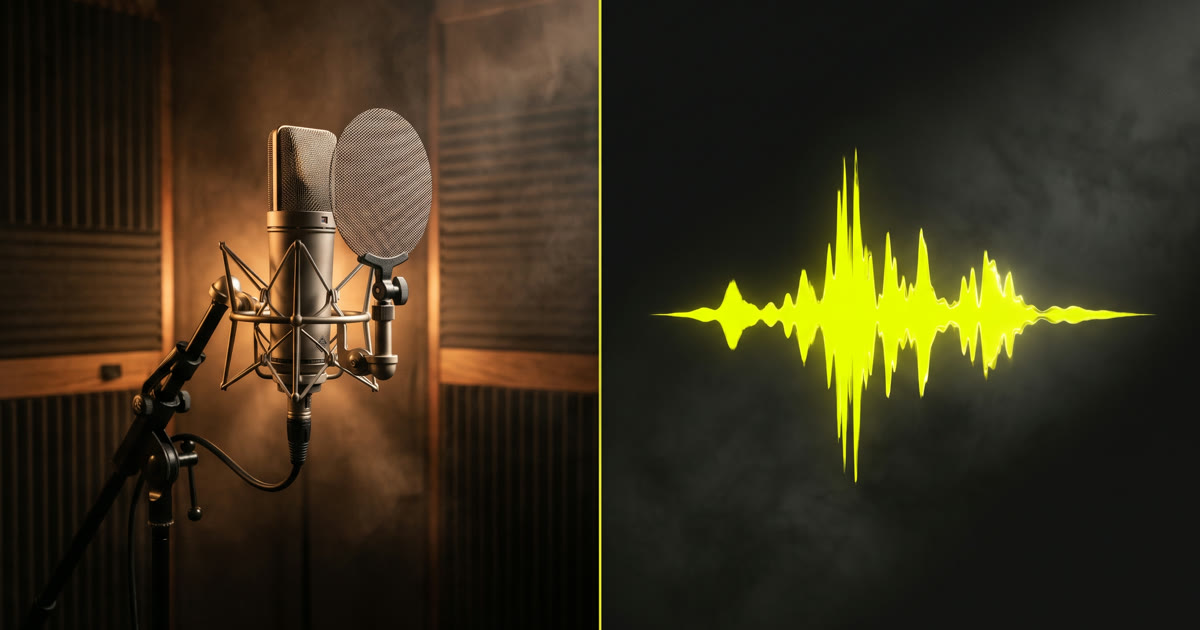
Pablo Giménez, a professional voice-over artist and Voicefinder co-founder, voiced this US TV spot in a studio. We then cloned his voice, with his consent, and Voyager 1 read the same script word for word.
It also points to a way of working open to voice actors: use a consented clone of their own voice for quick turnarounds and pick-ups, and keep studio sessions for the work that needs them. Read more in AI voice cloning: how it works, consent and safety.
When should you hire a voice actor instead of AI?
- A national campaign with a signature voice. If the voice is part of the brand for years, you want a person and an exclusive agreement.
- Performances that carry the piece. Character work in games and animation, comedy timing, or an emotional brand film where every breath matters.
- Union productions. SAG-AFTRA signatory projects follow union agreements.
- Clients who ask for a human. Some agencies and broadcasters require it in their contracts.
Voicefinder started as a marketplace of professional voice actors and still is one: you can browse 1,000+ verified voice actors and run a casting to get custom auditions.
When is AI voiceover the better choice?
- Volume: e-learning libraries, product videos, help-center tutorials, phone menus (AI voice for phone systems).
- Speed: ads that need to go live today, or scripts that change after legal review.
- Many versions: A/B tests of an ad, regional variants, or the same course in Spanish, German and French.
- Budget: a small business that would not hire a voice actor at all. See AI voice for ads and AI voice for e-learning.
How to budget a project with either option
- Count the words. English narration runs about 150 words per minute.
- Define the usage. Internal, your own website, paid social, radio or TV, and for how long. This drives most of a voice actor's quote.
- Count the versions. Languages, lengths (:15, :30, :60) and expected script changes.
- Get one human quote and one AI test. Generate the first 30 seconds with AI and compare it with an audition before you commit.
FAQ
How much does a voice actor charge per minute?
For e-learning, a typical non-union rate is $30 to $55 per finished minute, with a project minimum around $350 to $450, according to rate guides based on the GVAA guide. Ads are priced per spot and usage instead.
How much does a 30-second commercial voiceover cost?
For a non-union voice actor, from about $275 to $400 for one month of local radio to $4,000 to $8,000 for a year of national TV, plus a session fee. With an AI voice on a paid plan, the license is included and there is no per-spot usage fee.
Is AI voiceover cheaper than a voice actor?
For most volume work, yes: a $12 monthly plan covers about 100 minutes of commercial audio. For a flagship campaign, a voice actor's interpretation and exclusivity can be worth the price.
Can I use an AI voice in a paid ad?
On Voicefinder, yes, on any paid plan. The Terms allow commercial use "including advertising in any media, with no additional licence required".
Do AI voices replace voice actors?
Not for everything. Many teams use AI for volume and quick changes and book voice actors for campaigns and performances. Voicefinder offers both.
Start free and compare it on your script: 10,000 characters a month