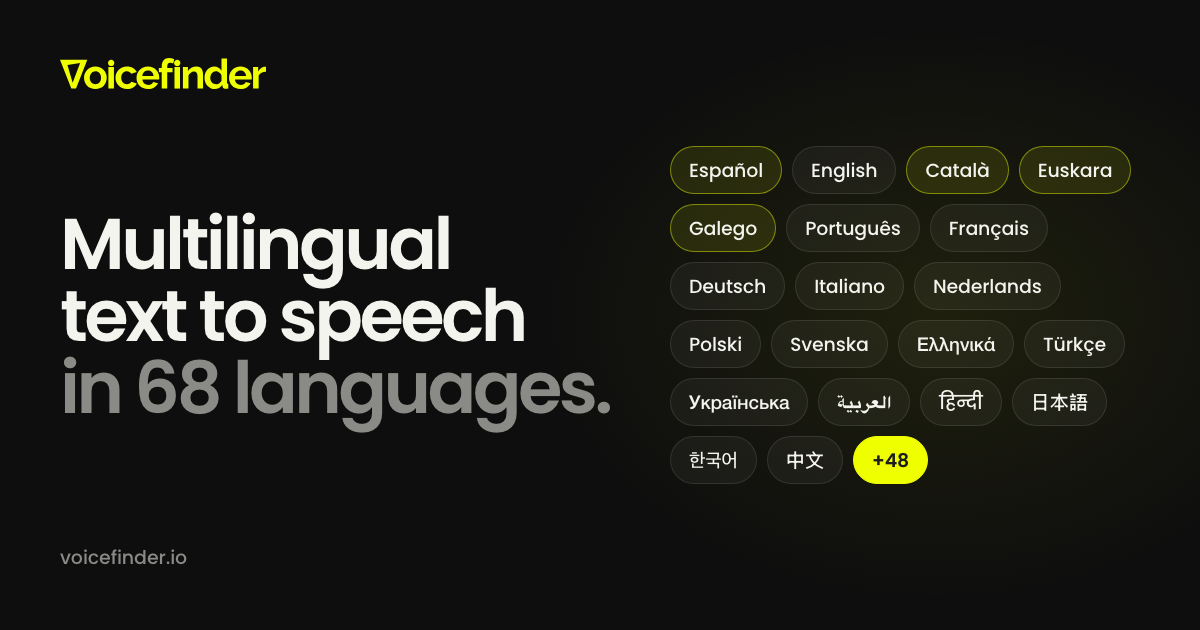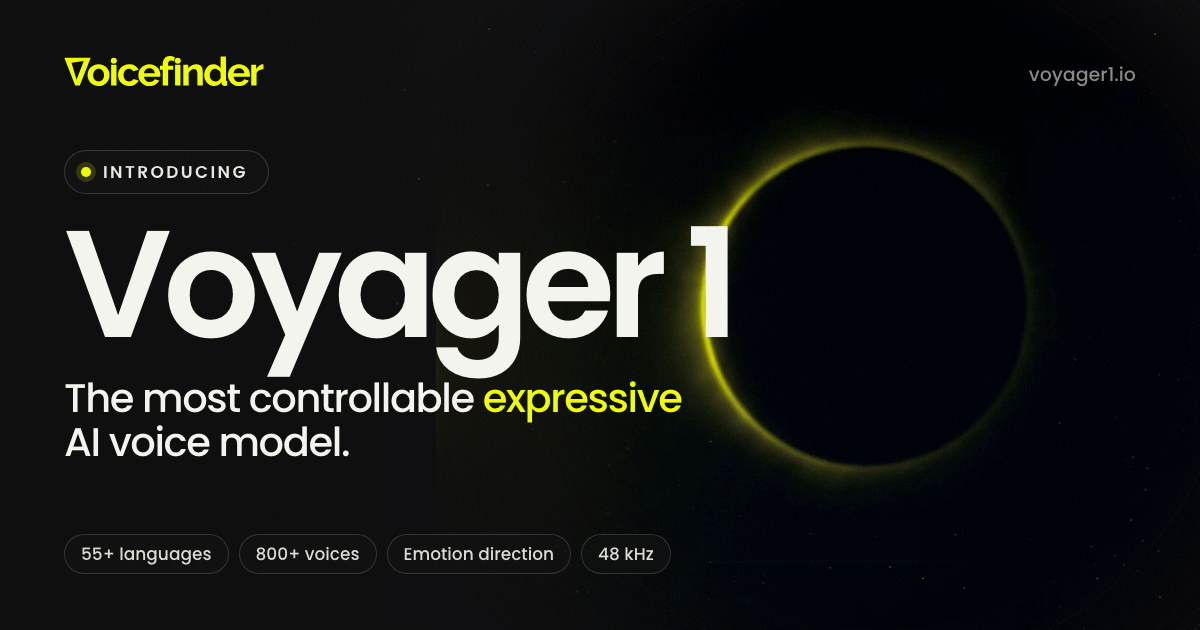
Basque text to speech turns written euskara into spoken audio. Most tools offer one or two Basque voices, often with a flat, neutral read. Voicefinder has 15 native Basque voices on its Voyager 1 model, and you can direct them line by line with emotions, voice effects and reading styles, in Basque, at 48 kHz.
This guide explains what makes Basque hard for speech synthesis, which voices are available, how emotion direction works in euskara, and how the same voices handle bilingual Basque and Spanish projects. At the end there is a short section on Galician and Catalan, the other two co-official languages of Spain.
Why is Basque text to speech harder than most languages?
Basque is a language isolate: it is not related to Spanish, French or any other living language. It is agglutinative, so words carry long chains of suffixes (etxe, etxean, etxeetakoak), and stress and rhythm work differently from Spanish. A model trained mostly on Spanish data tends to read Basque with Spanish rhythm, which native listeners notice at once.
There is also less recorded speech to learn from than for large languages. That is why public work in this area matters. The HiTZ Center (Aholab) at the University of the Basque Country (UPV/EHU) has released two free Basque synthesis voices, Maider and Antton, under an open licence, as part of public efforts to support the languages of Spain. They are a valuable resource for researchers and developers, and one of our catalogue voices, Ander, is built from that open data with credit on our voice credits page.
What has been harder to find is choice: several adult, young and senior voices, male and female, that can also act, not just read.
The 15 native Basque voices
All 15 voices have Basque as their main language: 7 female and 8 male, from young adult to senior. Each comes with casting notes (pitch, texture, what it is good for) and documented provenance.
| Voice | Profile | Good for |
|---|---|---|
| Ane | Female, adult, mid-pitched, measured | Narration, e-learning, audio guides |
| Irati | Female, adult, mid-pitched, friendly | Video narration, e-learning |
| Itziar | Female, senior, deep and warm | Documentaries, institutional video |
| Haizea | Female, adult, measured | Narration, phone lines |
| Garazi, Maialen, Nerea | Female, adult, neutral | Corporate video, training |
| Aitor | Male, adult, friendly | E-learning, video narration |
| Ibai | Male, adult, high-pitched, youthful | Online ads, radio spots |
| Jon | Male, adult, deep | Narration, radio |
| Ander | Male, young adult, neutral | Phone lines, corporate video |
| Gorka, Xabier | Male, adult | Corporate video, training |
| Oier | Male, young | Social content, youth campaigns |
| Patxi | Male, senior | Storytelling, institutional video |
You can hear every one of them on the Basque text to speech page before signing up.
Can you direct emotion in Basque text to speech?
Yes. Basque gets the full set of Voyager 1 direction: 32 emotions, 18 voice effects and 9 reading styles. You write the tag in square brackets at the start of the sentence, in English, and the voice performs the sentence that way. The tag names stay in English in every language; the text stays in Basque.
[upbeat] Egun on guztioi!
[hushed] Baina lehenago, sekretu bat kontatu behar dizuet…
[laugh] Inor ez zen konturatu!
Some of the tags you will use most:
- Emotions: [upbeat], [enthusiastic], [friendly], [confident], [serious], [serene], [comforting], [intrigued], [astonished], [ironic], [hushed], [unhappy].
- Voice effects: [laugh], [belly laugh], [chuckle], [sigh], [gasp], [ahem], [deep breath], [exhale]. Effects sound at the point where you write them.
- Styles: [storyteller], [documentary], [newscaster], [radio spot], [tutorial], [meditation], [movie trailer].
Tags are not counted as characters, so directing a script costs nothing extra. You can also write the direction in your own words, in Basque, Spanish or English, the way you would brief an actor. The four takes below are the same voice and the same sentence ("Something new starts today, and I wanted you to hear it in my voice"), each with a different direction:
What people use Basque text to speech for
Training and e-learning in euskara
Schools, public bodies and companies that work in Basque need courses with the same voice across every module. A calm, clear voice such as Aitor or Ane, plus the [tutorial] style, covers most of it.
Bilingual advertising
Radio, social and in-store spots often run in Basque and Spanish. The Basque voices speak Spanish too, so both versions can use the same voice. Here is a radio-style spot and a news read:
Phone lines and audio guides
Menus and hold messages in Basque and Spanish, and narration for museums, trails and cultural centres. For phone systems you can export telephony WAV at 8 or 16 kHz.
Bilingual Basque and Spanish with one voice
Every voice in the catalogue speaks all 55+ languages, and the Basque voices speak Spanish with a northern Spain accent. That solves a common problem in the Basque Country: the Spanish version of a video sounding like a different brand. Listen to the same voice in both languages:
The reverse also works: any of the other 800+ voices can read Basque. They read it clearly with a trace of their own language, which suits a character from abroad or a brand that wants one voice in every market. For a local sound, use a native voice.
Start free: 10,000 characters a month
Tips for writing a Basque script for AI voice
- Write numbers in words. In Basque and Galician, spelling out numbers, dates and prices is the safest way to get them read correctly.
- Send the language. In the API, pass
"language": "eu"so the model and the pronunciation dictionary know the text is Basque. - One emotion per sentence. Put the tag at the start of the sentence it affects. Two tags back to back do not blend reliably.
- Punctuation sets the rhythm. Commas and full stops create pauses. For an exact pause, use
[pause:0.5](seconds). - Listen before you publish. If a word comes out wrong, generate again or write it the way it sounds.
Galician and Catalan text to speech
The same direction works in Spain's other co-official languages:
- Galician: 16 native voices, with emotions, effects and styles. See Galician text to speech.
- Catalan: 7 native voices, plus 7 Castilian voices with a Catalan accent for the Spanish version. See Catalan text to speech.
Basque text to speech via API
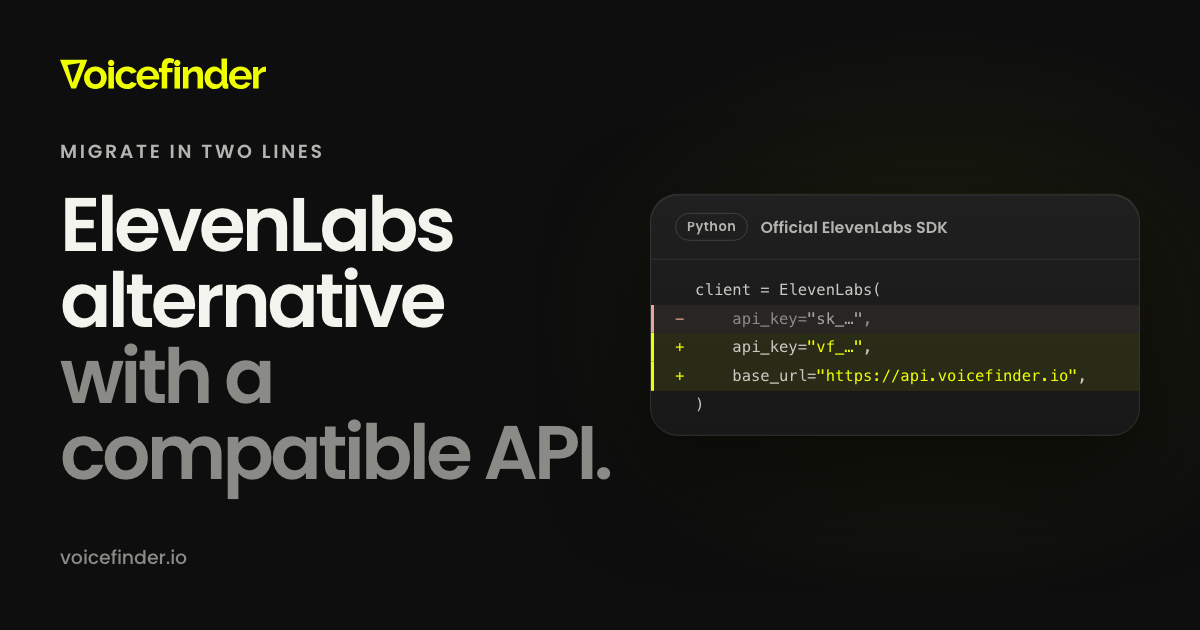
One endpoint covers every language. Call POST /v1/text-to-speech/{voice_id} with "language": "eu" and the audio comes back in the response at 48 kHz, already marked with an AudioSeal watermark and C2PA Content Credentials. The API is available on every plan, including Free, and accepts the ElevenLabs request format if you are migrating. Start at the text to speech API page.
FAQ
What is the best Basque text to speech?
One whose voices do not sound translated. Look for native Basque voices, a choice of ages and registers, and a way to direct emotion. Voicefinder offers 15 native voices with the full set of tags; HiTZ's open voices are a good free option for research and development.
Are the Basque voices native speakers?
Yes. All 15 have Basque as their main language, and each one has documented provenance.
Can I direct emotions in Basque?
Yes: 32 emotions, 18 voice effects and 9 styles, written in square brackets. Tags are free.
Do the Basque voices speak Spanish?
Yes, with a northern Spain accent, so a bilingual campaign can keep the same voice in both versions.
How much does Basque text to speech cost?
The same as any language: one credit per character. The Free plan gives you 10,000 characters a month for personal use; commercial use starts with Basic at $12 a month. See pricing.
Can I clone my own voice and use it in Basque?
Yes. A clone made from under 10 seconds of audio can speak Basque. The Free plan includes one clone. See AI voice cloning.
Write your first lines in euskara and hear them in a native voice. Start free: 10,000 characters a month